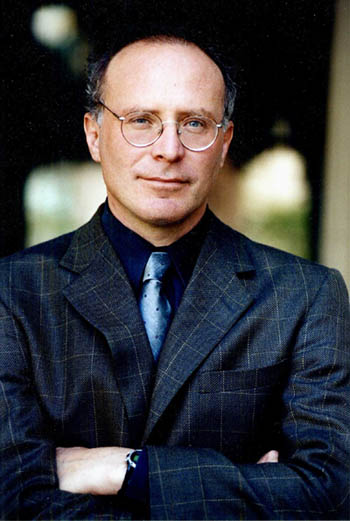
Roger Waldinger, Distinguished Professor (Ph.D. Harvard, 1983) and Director of the UCLA Center for the Study of International Migration works on international migration: its social, political, and economic consequences; the policies and politics emerging in response to its advent; the links between immigrants and the countries and people they have left behind; the trajectories of newcomers and their descendants after migration. He is the author of over 100 articles and book chapters and eight books, most recently, A Century of Transnationalism: Immigrants and their Homeland Connections (edited with Nancy Green; University of Illinois Press, 2016) and The Cross-Border Connection: Immigrants, Emigrants, and their Homelands, (Harvard University Press, 2015).
Waldinger's most recent books address a paradox at the core of the migratory phenomenon: emigrants departing one society become immigrants in another, tying those two societies together. The Cross-Border Connection explains how interconnections between place of origin and destination are built and maintained and why they eventually fall apart. Newcomers to the developed world find that migration is a good thing and they send some of these benefits back to relatives as remittances. Residing in a democratic state, emigrants mobilize to produce change in the homelands they left, while emigration states extend their influence across boundaries to protect nationals and retain their loyalty. Time, however, proves corrosive, and most immigrants and their descendants become disconnected from their place of origin, reorienting their concerns to their new home. In A Century of Transnationalism, Green, Waldinger and a group of sociologically minded historians and historically minded sociologists take aim at the conviction that the cross-border ties of today's world of mass migration are unprecedented. Looking back over the past century and more, A Century of Transnationalism shows that while population movements across states recurrently produce homeland ties, those connections have varied across contexts and from one historical period to another, changing in unpredictable ways. Any number of factors shape the linkages between home and destination, including conditions in the society of immigration, policies of the state of emigration, and geopolitics worldwide.
Waldinger is currently Director of the UCLA Center for the Study of International Migration, an interdisciplinary, cross-campus center seeking to focus research and instruction on the causes and consequences of population movements across borders. Waldinger previously served as Interim Associate Vice-Provost for International Studies, 2010-2012; Chair of the Department of Sociology from 1999-2004; and Director of the Lewis Center for Regional Policy Studies, UCLA School of Public Affairs from 1995-1998. He is a regular instructor in the year-long graduate, sociology seminar on international migration in comparative perspective. He has taught all three quarters: the first, on theory, history, and policy; the second, on economic and social incorporation; the third, a research seminar.
Waldinger was a 2008 Guggenheim Fellow. He received the Distinguished Career Award, International Migration Section, American Sociological Association in 2012 and, with Thomas Soehl, the 2013 Reuben Hill Award (best research article), National Council on Family Relations. His books have won numerous scholarly awards.
Many of Waldinger's publications are available for free download from this homepage, as well as from his SelectedWorks page at bepress and the working paper series maintained by the UCLA Program on International Migration.