
Rebecca Jean Emigh
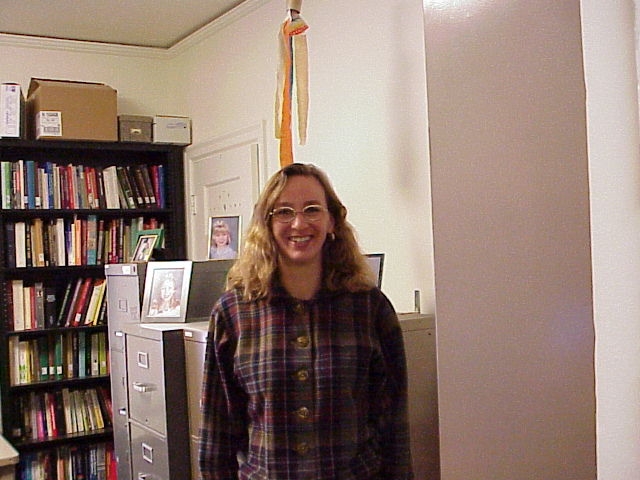
Biography
I study long-term processes of social change.
In particular, I am interested in how cultural, economic, and demographic factors intersect to create these processes of social change. This interest is reflected in two large research projects, one on transitions to capitalisms and one on forms of information gathering. In both projects, in different ways, I use historical perspectives and mixed methods to analyze the similarities and differences in these social phenomena in the past and present. I am especially interested in a “view from below,” that is, how ordinary people affect social relations, and thus, the course of history.
Degrees
Ph.D. Sociology, University of Chicago, 1993.
M.A. Statistics, University of Chicago, 1990.
M.A. Sociology, Columbia University, 1985.
B.A. Sociology, Summa Cum Laude, Phi Beta Kappa, Honors in Sociology, Barnard College, Columbia University, 1984.
Research
How Everyday Forms of Racial Categorization Survived Imperialist Censuses in Puerto Rico, a book co-authored with Patricia Ahmed and Dylan Riley, was published by Palgrave Macmillan in 2021. There’s a talk about it here. I also did an interview for the UCLA Social Science book series on it (June 2022). Click here to watch it.

I published an article titled “A Historical Sociology of the Authentication of News” in Items, a digital forum for insights from the social sciences created by the Social Science Research Council (August, 2021). Click here to read it.
The panel “Opportunities and Challenges in Historical Methods”, organized by CHAT (Comparative and Historical Analysis and Theory), took place on May 21 2021 over Zoom. I presented on comparative methods. Click here to watch my talk.
LA Social Science wrote an article about my Fiat Lux Seminar “Do We Make a Difference? Social Change in Theory and Practice”. Click here to read it.
Dylan Riley, co-author of the book “Antecedents of Censuses from Medieval to Nation States: How Societies and States Count“, was invited to speak on AirTalk KPCC during a segment titled “With Supreme Court Ruling On Census Question Coming Soon, A Look At Its Potential Effects On California” on June25, 2019. Click here to listen to it.
The conference “The Dialectic of Private and Public Knowledge in Early Modern Europe,” organized by myself, Dylan Riley, and Patricia Ahmed and co-hosted by the Clark Library at UCLA and the UCLA Center for Seventeenth-& Eighteenth-Century Studies, took place on April 12, 2019 at the William Clark Memorial Library.
I was invited to speak on AirTalk KPCC during a segment titled “What does ‘white’ mean? How the Census measures race” on April 2, 2019. Click here to listen to it.
I presented a paper entitled “Orality and Literacy: A Comparative and Historical Perspective” based on an ongoing book project.

My work with Dylan Riley and Patricia Ahmed was highlighted by LA Social Science in an article titled “UCLA Faculty and Alumni Discuss the Past and Present Politicization of the US Census” published on September 6, 2018. Click here to read it.
How Societies and States Count, a two-volume set co-authored with Dylan Riley and Patricia Ahmed, was published by Palgrave Macmillan in 2016


These books were featured during the author meets critics session at the Social Science History Association Meetings on November 19th, 2016.


At this event, we were awarded with the SSHA 2015 Founder’s Prize.

—
The books were featured at the California Sociological Association Meetings in November, 2016.

—
We presented these books at Northwestern University in October, 2016.
—

The volumes were launched at the UCLA CMRS on April 21, 2016 in Royce Hall.


—
Click here to hear a talk about this project, given at Berkeley, in March 2016.
Publications
“The Present of the Past: A Sociotechnological Framework for Understanding the Availability of Research Materials” (with Johanna Hernández-Pérez), IEEE: The Annals of the History of Computing 44 (4), 16‒27, 2022, 10.1109/MAHC.2022.3213232
“A History of Modern European Monetary Unions as Territories, Institutions, and Markets” (with Michelle Marinello and Zachary DeGroot). In Economies, Institutions, and Territories: Dissecting Nexuses in a Changing World, edited by Luca Storti, Giulia Urso, and Neil Reid, 91‒116, Milton Park: UK: Routledge, 2022.
“Historical and Comparative Methods.” (with Corey S. O’Malley) The Blackwell Encyclopedia of Sociology, edited by George Ritzer and Chris Rojek. 2nd Edition. John Wiley & Sons, 2021. DOI: 10.1002/9781405165518.wbeosh035.pub2
“Towards Interactive Perspectives on Information Gathering: What Are Resolvable Differences?” Journal of Cultural Economy 15 (1):123‒126, 2021, https://doi.org/10.1080/17530350.2021.1974076.
“The Social Foundations of Positivism: The Case of Late Nineteenth Century Italy.” (With first author, Dylan Riley and third author, Patricia Ahmed). Social Science History 45 (4): 813‒842, 2021. Winner of the Article Prize from the ASA Section on the History of Sociology and Social Thought, 2023.
How Everyday Forms of Classification Survived Imperialist Censuses in Puerto Rico. (With Patricia Ahmed and Dylan Riley). Cham, Switzerland: Palgrave Press, 2021.
“Getting Real: Heuristics in the Sociology of Information Gathering.” (with first author, Dylan Riley and second author, Patricia Ahmed). Theory and Society 50 (2): 315‒356, 2021. Co-winner of the Outstanding Marxist Sociology Article Award, Marxist Sociology Section of the American Sociological Association, 2022.
“Review of The Making of Capitalism in France: Class Structures, Economic Development, the State and the Formation of the French Working Class, 1750–1914, by Xavier Lafrance.” Contemporary Sociology: A Journal of Reviews 49 (6): 521–522, 2020, https://doi.org/10.1177/0094306120963121n
“Age at Death in Rural Georgia: A Historical Analysis of Mortality Records in the Kistauri Commune.” (with first author, Tinatin Zurabishvili and second author, Rennie Lee.) Journal of Family History 45 (4): 457–478, 2020,https://doi.org/10.1177/0363199020929679.
“The Sociology of Official Information Gathering: Enumeration, Influence, Reactivity, and Power of States and Societies.” (With Dylan Riley and Patricia Ahmed). Pp. 290–320 in The New Handbook of Political Sociology,edited by Thomas Janoski, Cedric de Leon, Joya Misra, and Isaac William Martin. New York: Cambridge University Press, 2020.
“Toward a Sociology of Knowledge of Land Surveys: The Influences of Societies and States.” (With Dylan Riley and Patricia Ahmed.) Journal of Historical Sociology 32 (4): 404‒425, 2019.
“Review of The Free Port of Livorno and the Transformation of the Mediterranean World, 1574‒1790 by Corey Tazzara.” The American Historical Review 124 (2): 752‒753, 2019.
“The Effect of State Transfers on Poverty in Post-Socialist Eastern Europe.” (With Cynthia Feliciano, Corey O’Malley, and David Cook-Martín). Social Indicators Research 138 (2): 545–574, 2018.
“Review of England’s Great Transformation: Law, Labor, and the Industrial Revolution by Marc W. Steinberg.” American Journal of Sociology 123 (3): 936–938, 2017.
Antecedents of Censuses From Medieval to Nation States: How Societies and States Count (Volume 1) andChanges in Censuses from Imperialist to Welfare States: How Societies and States Count (Volume 2). (with Dylan Riley and Patricia Ahmed). Palgrave Macmillan, 2016. (Honorable Mention, Barrington Moore Prize for Best Book, Comparative and Historical Section of the American Sociological Association, 2017.)
Volume 1: Palgrave-Macmillan, Springer
Volume 2: Palgrave-Macmillan, Springer
Reviews of Antecedents of Censuses From Medieval to Nation States and Changes in Censuses from Imperialist to Welfare States:
Author-meets-critics Symposium. Trajectories 28(3):10–42, 2017.
Masi, Anthony C. “‘People Count in Counting People’: A Proposed Alternative Narrative on the Origins and History of Modern Censuses.” Canadian Studies in Population 3–4: 149–153, 2018.
Rohrbasser, Jean-Marc. “Rebecca Jean Emigh, Dylan Riley, Patricia Ahmed, 2016, Antecedents of Censuses from Medieval to Nation States. How Societies and States Count, New York, Palgrave Macmillan, 266 p.” Population 73(2):390–392, 2018.
Swanson, David A. “Review of Changes in Censuses from Imperialist to Welfare States: How Societies and States Count.” Contemporary Sociology 46(2):179–180, 2017.
“Transitions to Capitalisms: Past and Present.” Pp. 577–596 in The Sociology of Development Handbook, edited by Gregory Hooks. Oakland: University of California Press, 2016.
“The Racialization of Legal Categories in the First US Census.” (Lead author; with Dylan Riley and Patricia Ahmed). Social Science History, 39 (4): 485‒519, 2015. (Winner of the SSHA 2015 Founders Prize.)
The Undevelopment of Capitalism: Sectors and Markets in Fifteenth-Century Tuscany. Philadelphia: Temple University Press, 2009.
Reviews of The Undevelopment of Capitalism:
Epstein, Steven A. “Review of The Undevelopment of Capitalism: Sectors and Markets in Fifteenth-Century Tuscany.” The Journal of Economic History 71(2):529–530, 2011.
Lachmann, Richard. “Review of The Undevelopment of Capitalism: Sectors and Markets in Fifteenth-Century Tuscany.” International Journal of Comparative Sociology 51(3):236–238, 2010.
Mielants, Eric. “Review of The Undevelopment of Capitalism: Sectors and Markets in Fifteenth-Century Tuscany.” Contemporary Sociology 38(6):575–576, 2010.
Stern, Laura Ikins. “Review of The Undevelopment of Capitalism: Sectors and Markets in Fifteenth-Century Tuscany.” Journal of Interdisciplinary History 41(1):144–146, 2010.
“Author (Paul McLean) Meets Author (Rebecca Emigh) Meets Critics (Emily Erikson, Randall Collins, Rosemary Hopcroft).” Trajectories 21(1):13–29, 2009.
“What Influences Official Information? Exploring Aggregate Microhistories of the Catasto of 1427.” Pp. 199–223 in Small Worlds: Method, Meaning, and Narrative in Microhistory, edited by James F. Brooks, Christopher R. N. DeCorse, and John Walton. Santa Fe: School for Advanced Research Press, 2008.
“Internal and External Ethnic Assessments in Eastern Europe.” (with Patricia Ahmed and Cynthia Feliciano.) Social Forces 86(1):231–255, 2007.
“The Unmaking of Markets: A Composite Visual History.” Vectors: Journal of Culture and Technology in a Dynamic Vernacular 1, 2005. [Online]. Available: http://vectors.usc.edu/index.php?page=7&projectId=5 (click on “launch project”) (Opened at the MOCA, Los Angeles, March 3, 2005).
“Household Composition in Post-Socialist Eastern Europe.” (with first author, Patricia Ahmed). The International Journal of Sociology and Social Policy 25(3):9–41, 2005.
“The Great Debates: Transitions to Capitalisms.” Pp. 355–380 in Remaking Modernity: Politics, History, and Sociology, edited by Julia Adams, Elisabeth Clemens, and Ann Shola Orloff. Durham: Duke University Press, 2005.
“[The] Transition(s) to Capitalism(s)?: A Review Essay.” Comparative Studies in Society and History 46(1):188–198, 2004.
“Economic Interests and Sectoral Relations: The Undevelopment of Capitalism in Fifteenth-Century Tuscany.”American Journal of Sociology 108(5):1075–1113, 2003.
“Property Devolution in Tuscany.” The Journal of Interdisciplinary History XXXIII(3):385–420, 2003.
“Numeracy or Enumeration? The Uses of Numbers by States and Societies.” Social Science History 26(4):653–698, 2002.
“Post-Colonial Journeys: Historical Roots of Immigration and Integration.” (with first author, Dylan Riley) Comparative Sociology 1:169–191, 2002.
“Theorizing Strategies: Households and Markets in 15th-Century Tuscany.” The History of the Family 6:495–571, 2001.
“Review of Regions, Institutions, and Agrarian Change in European History, by Rosemary L. Hopcroft.”Contemporary Sociology 30(6):601–603, 2001.
“The Racialization and Feminization of Poverty?” in Poverty, Ethnicity, and Gender in Eastern Europe During Market Transition. Westport, CT: Praeger, 2001 (with second author Eva Fodór and third author Iván Szelényi).
“Review of Capitalists in Spite of Themselves: Elite Conflict and Economic Transitions in Early Modern Europe,”by Richard Lachmann. American Journal of Sociology 106(3):832–834, 2000.
“Divergent Paths of Agrarian Change: Eastern England and Tuscany Compared.” The Journal of European Economic History 29(1):9–51, 2000 (with first author Rosemary L. Hopcroft).
“The Gender Division of Labor: The Case of Tuscan Smallholders.” Continuity and Change 15(1):117–137, 2000.
“Forms of Property Rights or Class Capacities: The Example of Tuscan Sharecropping.” Archives Europeennes de Sociologie (The European Journal of Sociology) 41(1):22–52, 2000.
“Means and Measures: Property Rights, Political Economy, and Productivity in Fifteenth-Century Tuscany.”Social Forces 78(2): 461–490, 1999.
“The Length of Leases: Short-Term Contracts and Long-Term Relationships.” Viator 30:345–382, 1999.
“Traces of Certainty: Recording Death and Taxes in Fifteenth-Century Tuscany.” The Journal of Interdisciplinary History XXX(II, Autumn):181–198, 1999.
“The Mystery of the Missing Middle-Tenants: The ‘Negative’ Case of Fixed-Term Leasing and Agricultural Investment in Fifteenth-Century Tuscany,” Theory and Society 27(3):351–375, 1998.
“Labor Use and Landlord Control: Sharecroppers’ Household Structure in Fifteenth-Century Tuscany,” The Journal of Historical Sociology 11(1):37–73, 1998.
“Land Tenure, Household Structure, and Fertility: Aggregate Analyses of Fifteenth-Century Rural Tuscan Communities,” The International Journal of Sociology and Social Policy 17(7/8):220–254, 1997.
“Land Tenure, Household Structure, and Age of Marriage in Fifteenth-Century Tuscany,” The Journal of Interdisciplinary History 27(4):613–635, 1997.
“The Spread of Sharecropping in Tuscany: The Political Economy of Transaction Costs,” The American Sociological Review 62:423–442, 1997. (Honorable Mention, Barrington Moore Prize for Best Article, Comparative and Historical Section of the American Sociological Association, 1999.)
“The Power of Negative Thinking: The Use of Negative Case Methodology in the Development of Sociological Theory,” Theory and Society 26:649–684, 1997.
“Loans and Livestock: Comparing Landlords’ and Tenants’ Declarations from the Catasto of 1427,” The Journal of European Economic History 25(3):705–723, 1996.
“Review of Fifteen Generations of Bretons: Kinship and Society in Lower Brittany, 1720-1980, by Martine Segalen.” American Journal of Sociology 98(1):214–216, 1992.
“Poverty and Polygyny as Political Protest: The Waldensians and Mormons,” Journal of Historical Sociology5(4):462–484, 1992.
“Polygynous Fertility: Sexual Competition versus Progeny,” American Journal of Sociology 94:832–855, 1989 (second author; with first author: Douglas L. Anderton).