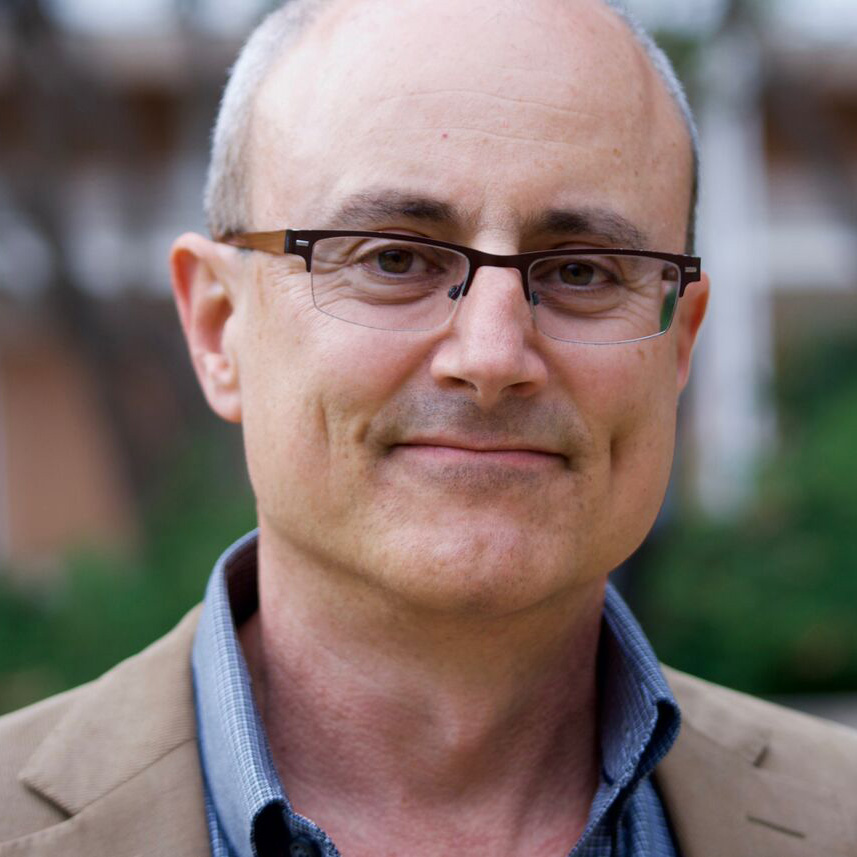
Michael Ross, Ph.D.
Associate Professor
UCLA Political Science Department

3375 Bunche Hall
310-267-5409
mlross@polisci.ucla.edu


Picture of Prof. Ross

Welcome to my homepage.  I've posted most of my articles and working papers below; also, if you click on the icon for my book, you'll be sent to Amazon.com, where you can read the first chapter or so of it.

 I received my Ph.D. in Politics from Princeton University in 1996.  From 1996 to 2001 I was an Assistant Professor in the Political Science Department at the University of Michigan, Ann Arbor.  I also spent the 2000 calendar year as a Visiting Scholar at the World Bank in Washington, D.C., and Jakarta, Indonesia. I'm now an Associate Professor of Political Science at UCLA; I'm also the Chairman of the International Development Studies program, and Acting Director of the Center for Southeast Asian Studies.

My research deals with political economy, democratization, natural resources, and poverty in the developing world - particularly (but not exclusively) in Southeast Asia.  My main project at the moment is a book on the "resource curse" that explains why countries with lots of mineral wealth tend to do worse than countries with less resource wealth.


Curriculum Vitae

Courses Taught at UCLA
 

My book

Timber Booms and Institutional Breakdown in Southeast Asia
(Cambridge University Press, 2001)

Articles

Oil, Islam, and Women
(American Political Science Review, February 2008)

 Is Democracy Good for the Poor?
(American Journal of Political Science, October 2006)

 A Closer Look at Oil, Diamonds, and Civil War
(Annual Review of Political Science, 2006)

 What Do We Know About Natural Resources and Civil War?
(Journal of Peace Research, May 2004)

How Does Natural Resource Wealth Influence Civil War? Evidence from 13 Case Studies
(IO, Winter 2004)

Does Taxation Lead to Representation?
(British Journal of Political Science, 34, 2004)

Announcement, Credibility, and Turnout in Popular Rebellions
(with Ravi Bhavnani, Journal of Conflict Resolution, June 2003)

Does Oil Hinder Democracy?
(World Politics, April 2001)

The Political Economy of the Resource Curse 
(World Politics, January 1999)

Book Chapters

Mineral Wealth, Conflict, and Equitable Development
(in Institutional Pathways to Equity: Addressing Inequality Traps, Anthony Bebbington, Anis Dani, Arjan de Haan, and Michael Walton eds., World Bank, 2008 )

How Mineral-Rich States Can Reduce Inequality
(in Escaping the Resource Curse, Jeffrey Sachs, Joseph Stiglitz, and Macartan Humphreys eds., 2007)

Resources and Rebellion in Indonesia
(in Understanding Civil War: Europe, Central Asia, and other regions, Paul Collier and Nicholas Sambanis eds., World Bank, 2003)

Oil, Drugs, and Diamonds: How Do Natural Resources Vary in their Impact on Civil War?
(In Beyond Greed and Grievance: The Political Economy of Armed Conflict, Karen Ballentine and Jake Sherman eds., Lynne Rienner, 2003)

The Natural Resource Curse: How Wealth Can Make You Poor
(in Natural Resources and Violent Conflict: Options and Actions, Ian Bannon and Paul Collier eds., World Bank, 2003)

Other Publications

Blood Barrels: How Oil Wealth Fuels Conflict
(Foreign Affairs, May/June 2008)

Myanmar, the Latest Petro-Bully
(Los Angeles Times (Op-Ed), October 26, 2007)

Nigeria's Oil Sector and the Poor
(Report for the UK Department for International Development, May 2003)

Extractive Sectors and the Poor
(Oxfam America, October 2001)

 Testing Inductively-Generated Hypotheses with Independent Data Sets
(Comparative Politics Newsletter, Winter 2003)

Working Papers

Booty Futures
(May 2005)

How Should States Manage Their Resource Rents? Some Considerations
(December 2004)

Indonesia's Puzzling Crisis
(July 2001)
 

Updated May 2008