
Exploring Sitio Drago | ||||
|
By Thomas A. Wake | ||||
| ||||
|
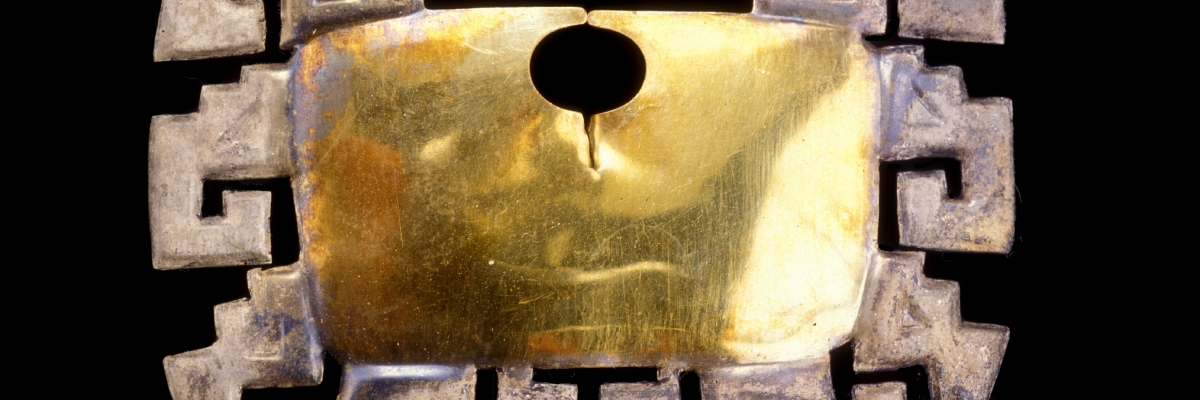
In July of 2002, I got a telephone call from my wife, who was teaching a primate behavior field school at the ITEC facilities in Boca del Drago on Isla Colon in the Caribbean province of Bocas del Toro, Panamá. Her description of copious ceramics, stone tools, and human remains exposed by a road grader piqued my interest, and I immediately hopped on a plane to Panamá. Located on the north shore of Isla Colón, Sitio Drago is a large (15 ha) pre-Columbian village consisting of at least fifteen low earthen mounds situated on an old beach ridge in an idyllic Caribbean coastal setting. The site stands out as a completely different type from any other studied in the region and is particularly well suited to examine the development of social organization in a dense tropical forest environment outside Amazonia and the Mesoamerican heartland. Sitio Drago represents the largest recorded site in the region, and the presence of prestige goods suggests social ranking and a complex society. Panamá and Costa Rica lie in what is often termed the "intermediate area," that large region filled with complex chiefdoms and segmentary societies somewhere between the "high" culture states in Mesoamerica and the Andes. The late Gordon Willey stated that "most of us have always looked upon lower Central America as being more 'backward' or 'retarded' in the development of archaeological space-time systematics than, say, Mesoamerica or Perú." However, he changed his mind before his demise. Pre-Columbian Panamá is probably best known for its lavish painted ceramic wares, intricate gold and tumbaga metalwork, and its complex iconography and stylized art styles. Several famous archaeological sites, including Monagrillo and Sitio Conte, are located in this area. Sitio Conte was widely held to be the richest archaeological site in the Americas until the recent discovery of Sipán in northern coastal Perú. Prehistoric Central Panamá was filled with populous, well-organized, surplus-producing, competitive chiefdoms whose vivid iconography depicts chiefly associations with powerful, stylized animal motifs representing ferocity in combat and reflecting power and ideology. The Bocas del Toro region is one of the least well-known provinces of Panamá. What little is known about the archaeology of Bocas del Toro province is the result of investigations by a handful of archaeologists over the past fifty years. Matthew and Marion Stirling visited the region in the 1950s, conducting fairly small-scale excavations at four sites, including Boca del Drago. The Stirlings describe the site at Drago as containing many large burial urns and other sherds, with scattered human bone fragments and a few stray sherds of "Alligator Ware" in the style of Pacific Chiriquí. They sank test pits in the forest away from the beach but did not find any archaeological deposits, and ultimately suggested a fairly low intensity occupation of the region. The only large-scale project in Bocas del Toro took place some thirty years ago. In the early 1970s, Olga Linares and Anthony Ranere worked at and around Cerro Brujo, in the western Panamanian highlands near Volcán Barú, and on the Pacific coast of Chiriquí. Bocas del Toro is described as a simpler, low-density, loosely organized society of root- and tree-crop swiddeners who exploited locally available forest and marine vertebrate and invertebrate resources. In 1977, Olga Linares stated that "the archaeological settlements of Bocas province appear to represent marginal populations organized on the basis of small family (?) groups, without status differentiation or political organization of any recognizable kind," existing in a cultural "backwater." In reality, the Bocas del Toro region may not be the cultural backwater it previously appeared. If public display of rank indicates a stratified society with a complex level of social organization, then Hernán Colón's account of contact with the inhabitants of modern Isla Colón bears strong testament. On October 5, 1502, Colón "encountered Indians who were naked . . . some wore only a gold mirror at the neck, others a guanín eagle." If site size has anything to do with ranked societies, then the 15 ha Sitio Drago has a great deal to offer. In the light of contact accounts of display of prestige goods and evidence of imported carved stone metates associated with elites, the field work that has taken place at Sitio Drago to date lends further support to the notion that prehistoric Bocas del Toro society was more complex than previously believed. A ten-day survey and surface collection at Sitio Drago in August of 2002 proved that the site is large and complex, consisting of several obvious surface features (mounds) and littered with a variety of surface artifacts and some human remains. A wide variety of ceramics, including polychrome sherds and mammal figurine fragments, were found on the surface. Several ground and polished celt and chisel fragments were encountered, along with unmodified and tanged prismatic basalt blades. Two carved stone fragments were also encountered, part of a carved stone metate, and what may be a fragment of a free-standing carved stone sculpture. | ||||
| ||||
|
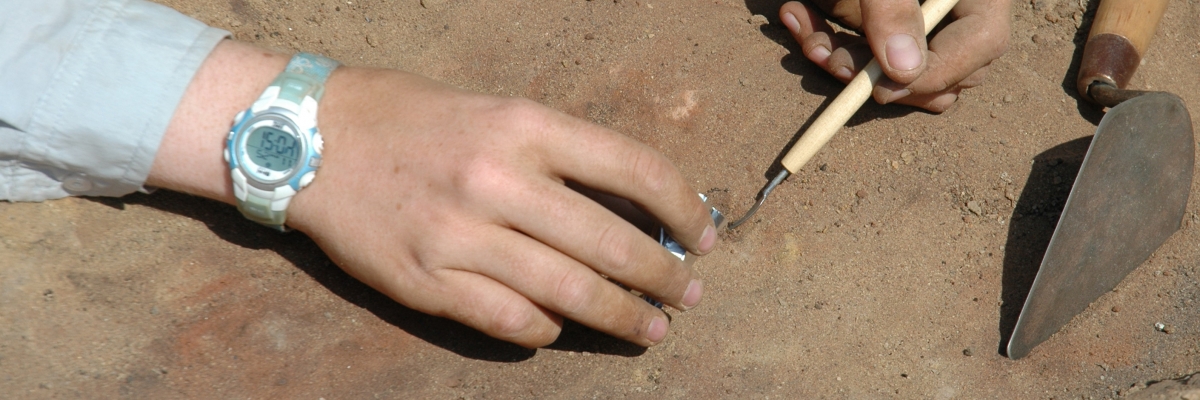
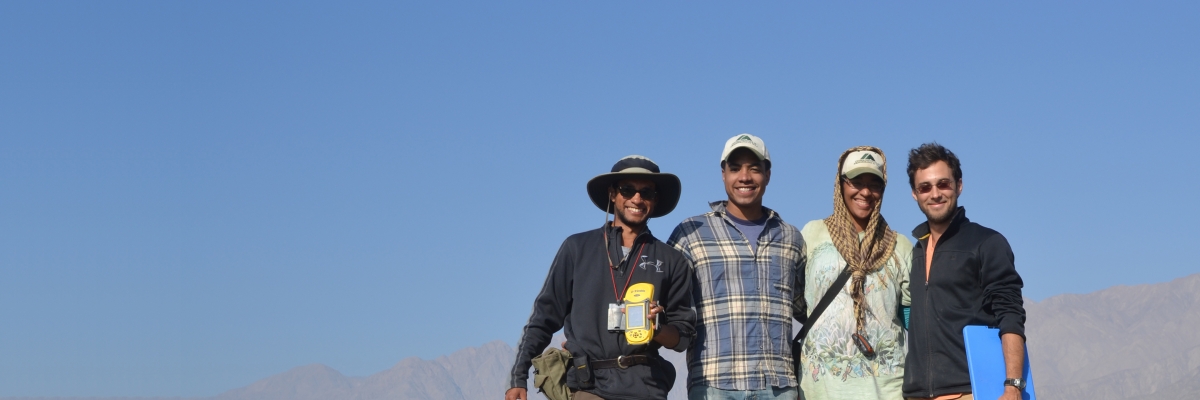
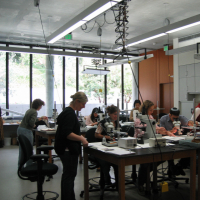
STUDENTS WITH THE INSTITUTE FOR TROPICAL ECOLOGY AND CONSERVATION FIELD SCHOOL PUT THEIR SKILLS TO WORK | ||||
|
It turns out that, not surprisingly, the site has been known to the local landowners, the Serracín family, for over thirty years. Ana Shaffer, one of the daughters of Aristides "Bolo" Serracín, who brought his family to Drago in the early 1960s, is an avid avocational archaeologist and has discovered a variety of artifacts while gardening at Drago over the years. She is now an important part of Proyecto Arqueológico Sitio Drago (PASD), enthusiastically participating in all aspects of the 2003 season. The summer of 2003 saw controlled excavation at Sitio Drago, Mound 6; detailed site mapping; and limited survey that discovered four new, small (1-2 ha) sites in the interior of the island. The 2003 project revolved around a field school taught through the Institute for Tropical Ecology and Conservation (ITEC: http//www.itec-edu.org) at Drago. ITEC has existed for ten years and has developed facilities including dormitories, an analytical lab, a computer lab, and a small library. I was able to obtain excavation and export permits from INAC, Panamá, as well as the local landowners. The director of Patrimonio Historico for INAC, Carlos Fitzgerald, whose family still lives in Bocas town, is strongly interested in the project and is participating as co-director. The 2003 PASD project findings include eight calibrated radiocarbon dates from Mound 6, Unit 1 (M6), ranging from 950 to 1150 AD. These dates are contemporaneous with the five other dates from the entire province from Cerro Brujo and fall within the Bocas phase (900-1100 AD) identified by Linares. The Bocas Phase is broadly contemporaneous with San Lorenzo Phase on the Pacific coast (800-1100 AD). Red-and-black-on-white Alligator Ware, red painted wares, and "Negative" or Lost Color Ware characterize the San Lorenzo cermaic phase. Analysis of the M6 ceramics identified several types similar to those at Cerro Brujo; one type virtually identical to the Linarte Zoned Red Line ware identified from San Lorenzo Phase deposits in Pacific Chiriquí; a pre-firing incised type not identified at Cerro Brujo but reminiscent of types from Diquís in Pacific Costa Rica; several sherds similar to Greater Chiriquí's signature Alligator Ware; and a sherd similar to wares from Central Panamá. Two partially complete vessels were recovered from M6. Vessel 1 is the body of a small tripod vessel that originally had long, hollow legs with animal figurines squatting on each shoulder and a low, flaring rim. Vessel 2 is an open cooking vessel with a low, flaring rim. Vessel 2 has a simple painted design with a red band running along the vessel rim and four groups of five vertical lines on the interior surface of the rim at 90 degrees from each other. Stone artifacts from surface and excavation contexts include imported unmodified and tanged basalt prismatic blades, and ground and polished celts, adzes, and chisels. Flake cores are present but rare. Basalt flakes increase in frequency below 90 cm. Two carved stone feline heads, identical to those seen on carved feline effigy metates interpreted by some as seats or thrones, were previously recovered from the site and are in possession of the landowners. Two other fragments of carved igneous rock representing at least two intricately worked feline effigy grinding stones/thrones were found in surface contexts during 2002, one margin and a midsection. Carved grinding stones similar to these are most commonly found in elite burials in Costa Rica and Panamá. They were probably imported to Drago, possibly from the Barú highlands. Plant remains include carbonized wood, carbonized seeds and fruit/nut fragments, and over twenty carbonized Raffia taedigera nuts. At least fifteen Raphia palm nuts were found together in a tight cluster, as if they were disposed of together after a cooking accident. Two of these nuts dated to 1050 +/ 60 and 1020 +/ 60 RYBP. Invertebrate remains include reef, sandy beach, and mangrove dwelling mollusk species as well as crab and a variety of intrusive land snails. Both bivalves and gastropods are well represented. Sessile reef bivalves (Arca zebra and A. imbricata) are common, as are three genera of oysters that live on mangroves (Crassostrea, Isognomon) and sea fans (Pteria). Conchs (Strombus) and predatory gastropods (Murex) from turtle grass flats and reef margins are also quite common. Analysis of vertebrate faunal remains from M6 shows similarities and differences with Cerro Brujo. Fish dominate the vertebrates, with at least thirty-eight families identified, including reef, pelagic, and mangrove species. Reptiles and amphibians are present, primarily sea turtle (MNI=5) and iguana, as well as snakes, lizards, frogs, toads, and caecilians. Forest mammals, primarily agouti, paca, and spiny rat, are well represented, along with several other species including collared peccary, white-tailed deer, three-toed sloth, armadillo, spider monkey, howler monkey, and at least three manatees. This project seeks to determine the subsistence economy, external trade and exchange relations, and social organization of Sitio Drago. We will compare the findings from Sitio Drago to those from Cerro Brujo and other sites in the region, focusing on analysis of site structure, artifact types, subsistence patterns, and social organization. We can then compare Sitio Drago and Bocas del Toro in general to Pacific Chiriquí and the Diquís region of Costa Rica, considered the heartland of Greater Chiriquí. PASD will contribute to a broader understanding of cultural interaction within Greater Chiriquí, between Bocas del Toro and Diquís to the northwest in Costa Rica, Chiriquí to the west on the Pacific coast and Veragüas and the central regions of Panamá to the southeast. Problem-driven investigation of Sitio Drago will ultimately show that past society in the Bocas del Toro archipelago was more complex than previously described. The large, internally complex, and artifactually diverse Sitio Drago stands to change interpretations of pre-Columbian society in Bocas del Toro. This project offers an opportunity to examine the development and elaboration of chiefdoms in a "marginal" coastal tropical forest environment that may be less marginal than previously proposed. This research would not be possible without the support of Aristides "Bolo" Serracín, Ana Serracín de Shaffer, Willy and Juany Serracín, and the rest of the Serracín family. I thank Carlos Fitzgerald, INAC, Panamá, for supporting this project and issuing the necessary permits. I thank ITEC for the opportunity to teach the 2003 field course and the use of their facilities. I thank Christina Campbell for bringing the site and this fabulous opportunity to my attention and David and Marvalee Wake for their support. Tom Wake is the director of the Zooarchaeology Lab at the Cotsen Institute of Archaeology at UCLA | |||||
| |||||
| |||||
|
A Feline Applique Figurine from Sitio Drago, Mound 6A, and a Tripod Vessel from Isla Colon | |||||