
David Sabean
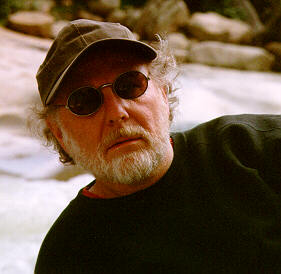
David Sabean
Distinguished Research Professor
Email: dsabean@history.ucla.edu
Office: 7242 Bunche Hall
Phone: 310-825-3173
Class WebsiteBiography
David Sabean graduated from Houghton College and studied cultural and intellectual history at the University of Wisconsin-Madison under George Mosse during the early 60s, interpellating a year at Brandeis University in the History of Ideas program. During those years, discussions among his generation of graduate students turned his interests to the new field of social history. He went off to Tübingen in 1995-6 to write a dissertation on the German Peasant War of 1525, eventually published as Landbesitz und Gesellschaft am Vorabend des Bauernkriegs (Stuttgart, 1972). From 1966 to 1970, he was a Lecturer at the University of East Anglia, Norwich, England. There, while rewriting his dissertation, he entered into discussions with social anthropologists and read widely in Anglo-Marxist historiography and Annales school history. From 1970 to 1976, Sabean taught at the University of Pittsburgh, where a remarkable group of young social historians had gathered. He joined the editorial board of the newly founded Historical Methods Newsletter (later Historical Methods) and founded and edited the journal Peasant Studies Newsletter (later Peasant Studies). During that period, he developed a large data base based on the records from a single South German village and spent a year as a post-doctoral student at Cambridge, studying social anthropology, with a concentration on kinship studies, with Jack Goody. From 1976 to 1983, Sabean joined a research group of social historians at the Max-Planck-Institut für Geschichte in Göttingen, who were studying the process of protoindustrialization. With Hans Medick, Alf Lüdtke, Robert Berdahl and others, he founded an interdisciplinary group of historians and anthropologists, which met in a series of round tables in Göttingen, Paris, Bad Homburg, and Bellagio. Several volumes of papers were published from those meetings, among which were Klassen und Kultur and Interest and Emotion. During that period, he began to explore the territory of popular culture and wrote Power in the Blood: Popular Culture and Village Discourse in Early Modern Germany (Cambridge, 1984; Ger: .Das zweischneidige Schwert (Berlin, 1986; Frankfurt, 1990)). Sabean returned to the United States in 1983 as a professor at UCLA, where he finished the first volume of his village study: Property, Production and Family in Neckarhausen, 1700-1870 (Cambridge, 1990). Tired of freeway driving, he left for Cornell University after five years, but nostalgia and a lively graduate program drove him back again five years later. He now holds the Henry J. Bruman Endowed Chair in German History. He published the second volume of his village study, Kinship in Neckarhausen, 1700-1870 (Cambridge, 1998), which attempts to rethink the categories of an earlier generation of social historians through more recent notions from cultural studies. He argues for the analytical usefulness of “kinship” and “class” for European history and suggests that rethinking both in terms of gender refits them for fresh ways of seeing historical issues. Sabean is now currently working on three projects: a study of narrativity in bureaucratic writing, collective research into the long-term history of kinship in Europe, and a comparative analysis of incest discourse in Europe since the sixteenth century. He has been a Guggenheim Fellow, a Fellow of the Wissenschaftskolleg in Berlin, the recipient of a research prize from the Alexander J. Humboldt Foundation and the Berlin Prize from the American Academy in Berlin. He has been elected to the American Academy of Arts and Sciences.
While in England from 1965-70, Sabean created a number of courses in social history (European peasantry, Aristocracy and Bureaucracy) and made them a central part of the curriculum. He also worked together with a group of sociologists and anthropologists in interdisciplinary courses on the history of the family. At Pittsburgh, he was part of an interdisciplinary group working on the comparative studies of peasantry. There he also worked together with anthropologists on the history of the family and taught lecture courses and seminars on historical demography. During the years in Göttingen, Sabean participated in a series of workshops on the history of the family and in interdisciplinary round tables (in anthropology and history) on work, kinship, Herrschaft, and memory. During the first years at UCLA (1983-88), he began to explore issues that have to do with the historicity of the self in his graduate research seminars–on the History of Individualism and the History of the Body. He also taught graduate courses on anthropology and history. Gradually his interests became more centered on the nineteenth century, although he continued to teach and still teaches and does research on problems from the sixteenth century onwards. He believes that graduate students should be trained broadly in European history and in comparative and multi-disciplinary approaches. At Cornell University (1988-93), Sabean continued to explore issues of selfhood but also became interested in new approaches to the social and cultural history of law. Back at UCLA, Sabean has alternated his graduate courses between German and comparative history. He has held seminars on the cultural history of German law and religion and on “identity and subjectivity,” “ego-documents,” “on reading Oedipus,” “production of the self in the West,” “conversion in European history and beyond,” “the history of emotions,” and “spaces of the self.” Recently his research seminar dealt with “international families.” His undergraduate lectures explore German history from the Baroque to World War I. An undergraduate seminar on “master/slave narratives” considered texts by Hegel, Frederick Douglass, Toni Morrison, W.E.B. Dubois, Frantz Fanon, and Simone de Beauvoir. Another on “popular culture in European history” examined historical approaches to the subject by Carlo Ginzburg and Natalie Davis.
During the past several years, Sabean has worked with a number of scholars engaged in rethinking the history of kinship in Europe from the Middle Ages to the present. With Simon Teuscher and Jon Mathieu, he edited a volume, Kinship in Europe: Approaches to the Long-Term Development (1300-1900) (New York and Oxford, 2007). At the International Congress of Historians in Oslo and at the past four meetings of the European Social Science History Conference, he helped develop sessions on sibling relations, international families, and kinship and blood and is co-editing collections of papers on each of these subjects. During the academic year 2007-8, he has organized five conferences with Malina Stefanovska on “places of the self” and will co-edit a volume of selected papers from the conferences. Since 2003, Sabean has been active organizing sessions for the German Studies Association annual meetings: “modernity and the Baroque,” “the radical Enlightenment in Germany,” “the Holy Roman Empire” (with a volume of edited papers in production), and “conversions in German history.”