
Margaret Jacob
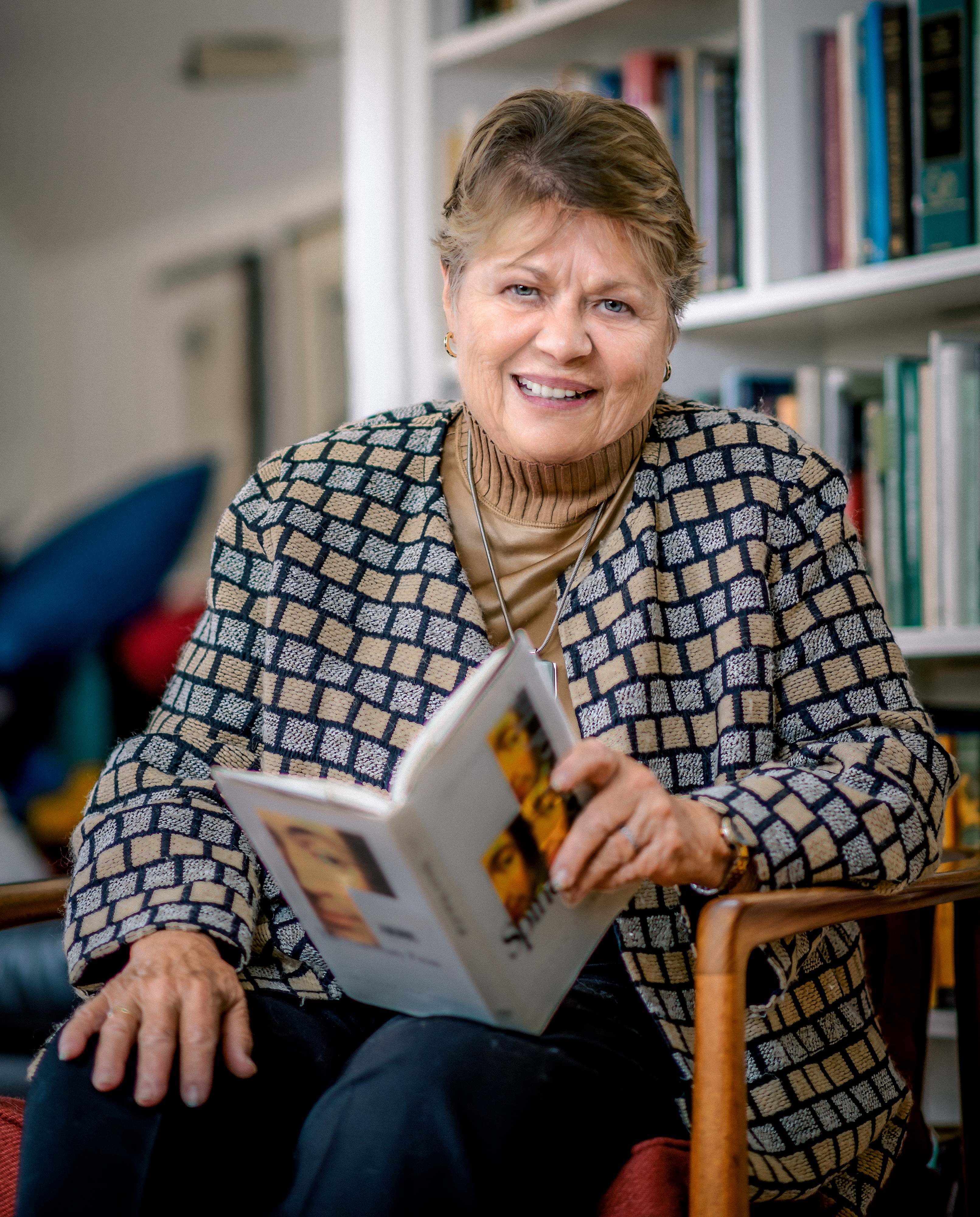
Margaret Jacob
Distinguished Research Professor
Email: mjacob@history.ucla.edu
Office: 6260 Bunche Hall
Phone: 310-794-4432
Class Website Curriculum Vitae
View All
Biography
Session devoted to her work, Annual meeting, American Historical Association, January, 2012.
Southern California Colloquium in the History of Science Technology and Medicine
UCLA Research Library Guide on the First Industrial Revolution
Publications
Forthcoming, Recent and Selected
Publications
-
Freemasonry and Civil Society: Europe and the Americas (North and South) Peter Lang, New York, 2023; Spanish edition to appear with Palabra de Clio in Mexico City. With Maru Eugenia Vasquez Semadeni.
- The Enlightenment: A Brief History, Bedford Books, 2001; second edition to appear in 2017
- The Secular Enlightenment, forthcoming, Princeton University Press
- edited with Catherine Secretan, Willem Frijhoff, and Wiep van Bunge, A Dictionary of the Dutch Golden Age (1579-1713)
- “How Radical Was the Enlightenment? What Do We Mean by ‘Radical’?” in Justyna Miklaszewska, and Anna Tomeszewska, Filozofia Oświecenia. Radykalizm – religia – kosmopolityzm, University Press, Jagiellonia, 2016, translated as “Ja bardzo radykalne bylo Oświecenie i co oznacza “radikakne?”, pp. 46-64.
- The First Knowledge Economy. Human Capital and Economic Development, 1750-1850, 2014 by Cambridge University Presshttp://www.cambridge.org/9781107619838
- edited with Catherine Secretan, In Praise of Ordinary People. Early Modern Britain and the Dutch Republic, 2014http://www.palgrave.com/products/title.aspx?pid=711782
- With Lynn Hunt and Wijnand Mijnhardt, The Book that Changed Europe,Harvard University Press, 2010 reviewed New York Review of Books, June 25th 2010.
http://www.hup.harvard.edu/catalog/HUNCOG.html - Janet Burke & Margaret Jacob, Les premières francs-maçonnes au siècle des Lumières, Bordeaux University Press, 2010.
190pp, avec un cahier de 8 illustrations en couleur.
http://livre.fnac.com/a3483143/Janet-Burke-Les-premieres-franc-maconnes-… - with Lynn Hunt and Wijnand Mijnhardt, eds. Bernard Picart and the First Global Vision of Religion. Getty Publications, 2010
http://www.getty.edu/bookstore/titles/picart.html - The Scientific Revolution: A Brief History with Documents, Bedford Books, 2010.
- with Catherine Secretan, eds. The Self-Perception of Early Modern Capitalists,Palgrave-Macmillan, 2008
- Strangers Nowhere in the World: The Rise of Cosmopolitanism in Early Modern Europe, University of Pennsylvania Press, 2006.
Click here to view this book @ OpinionJournal - The Origins of Freemasonry. Facts and Fictions, University of Pennsylvania Press, 2005.
- “Walking the Terrain of History with a Faulty Map,” Low Countries Historical Review, vol. 130-3, 2015, pp. 72-78.
- “‘Epilogue: Dichotomies Defied and the Revolutionary Implications of Religion Implied,” Historical Reflections, vol. 40, 2014, pp. 108-115.
- “Postscript” to Diego Lucci, ed, Atheism and Deism in the Enlightenment England, Ashgate, 2014
- “How Radical Was the Enlightenment?” in Diametros (a Polish journal)
http://www.diametros.iphils.uj.edu.pl/index.php/diametros/issue/current - “Among the Autodidacts: The Making of Edward Thompson,” Labour/Le Travail, vol. 71, 2013, pp. 156-60
- “The Left, Right and Science: Relativists and Materialists,” Logos. A Journal of Modern Science and Culture, vol. 12, 2013, pp. 10 (approx.) an online journal, http://logosjournal.com/2013/jacob/
- “French Education in Science and the Puzzle of Retardation, 1790-1840,” História e Economia, vol. 8, 2011, pp. 13-38.
- “The Nature of Early Eighteenth-Century Religious Radicalism” in Republic of Letters, vol 1, 2009http://arcade.stanford.edu/journals/rofl/articles/nature-early-eighteenth-century-religious-radicalism-by-margaret-jacob
- “Was the Eighteenth-Century Republican Essentially Anti-Capitalist?” Republic of Letters, vol. 2 2010,
http://arcade.stanford.edu/journals/rofl/articles/was-eighteenth-century-republican-essentially-anticapitalist-by-margaret-jacob - “The cosmopolitan as a lived category,” Daedalus, Summer, 2008, pp.18-25.
- “Mechanical Science on the Factory Floor: The Early Industrial Revolution in Leeds,” History of Science, vol. 45, 2007, pp. 197-221.
- “Scientific Culture and the Origins of the First Industrial Revolution,” Historia e Economia. Revista Interdisciplinar, vol. 2, 2006,pp. 55-70
- “Bernard Picart and the Turn to Modernity,” De Achttiende eeuw, vol. 37, 2005, pp. 1-16.
- With Larry Stewart, Practical Matter. The Impact of Newton’s Science from 1687 to 1851, Harvard University Press, November 2004.
- With M. Kadane, “Missing now Found in the Eighteenth Century. Weber’s Protestant Capitalist,” American Historical Review, February, 2003, vol 2008, pp. 20-49.
- with Lynn Hunt, “Enlightenment Studies,” in Alan Charles Kors, ed., Encyclopedia of the Enlightenment, 2003 vol 1 (Oxford: Oxford University Press): 418-430.
- With D. Sturkenboom, “A Women’s Scientific Society in the West: The Late Eighteenth Century Assimilation of Science” Isis, June, 2003, vol. 94, pp. 217-252
- With Michael Sauter “Why did Humphrey Davy not apply nitrous oxide to the relief of pain?”, The Journal of the History of Medicine, vol. 57, April 2002, pp. 161-176.
- With Lynn Hunt “The Affective Revolution in 1790s Britain,” Eighteenth Century Studies, vol. 34, 2001, pp. 491-521.
- With David Reid “Technical Knowledge and the Mental Universe of Manchester’s Cotton Manufacturers,”Canadian Journal of History, vol. 36, 2001, pp. 283-304. French translation appeared in Revue d’histoire moderne et contemporaine vol. 50-52, 2003.
- “Thinking Unfashionable Thoughts, Asking Unfashionable Questions,” American Historical Review, April 2000, vol. 105, pp. 494-500.
- “Commerce, Industry and Newtonian Science: Weber Revisited and Revised,” Canadian Journal of History, v. 35, Fall, 2000, pp. 236-51.
- The Enlightenment: A Brief History, Bedford Books, 2001.
- Scientific Culture and the Making of the Industrial West, published by Oxford University Press; 1997, a sequel to The Cultural Meaning; new edition planned for 2010, with additional chapters
- Telling the Truth about History with Lynn Hunt and Joyce Appleby, New York, W.W.Norton, 1994. Reviewed New York Times Book Review, March 25, 1994. TLS, June 10, 1994; The New Republic, Oct. 24, 1994; editions in Spanish, Polish, Lithuanian and Chinese under contract. A selection of the History Book Club. Forums on the book in History and Theory and the Journal of the History of Ideas.
- Newton and the Culture of Newtonianism, with Betty Jo Teeter Dobbs. My half discusses Newtonian mechanics and European industrial culture throughout the 18th century. Humanity Press, 1995. Winner of the Watson-Davis Award, History of Science Society
- Living the Enlightenment: Freemasonry and Politics in Eighteenth Century Europe, 1991, 350pp. Oxford University Press; reviewed TLS, June 12, 1992; AHR, 1993; JMH, 1994; Italian rights bought by Laterza. French translation appeared in 2004 with L’Orient, Paris.
- The Cultural Meaning of the Scientific Revolution, Alfred Knopf, sold to McGraw-Hill, New York, 1988, 273 pp. Reviewed New York Review of Books, April 28,1988; Italian translation, Einaudi Editore, 1992.
- The Radical Enlightenment: Pantheists, Freemasons and Republicans, published by George Allen & Unwin, London and Boston,1981; Italian translation, L’Illuminismo Radicale, published by Societa Editrice Il Mulino,1983. Second edition, revised, Cornerstone Books, 2005
- The Newtonians and the English Revolution, 1689-1720, Cornell University Press and Harvester Press, Ltd., 1976. Awarded the Louis Gottschalk Prize by the American Society for Eighteenth Century Studies. Reviewed in New York Review of Books, December 7, 1978. Italian translation, I Newtoniani e la rivoluzione inglese, 1689-I720, 1980 by Feltrinelli Editore, Milan. Reprinted, 1983; Japanese translation, 1990. Available from Gordon and Breach, “Classics in the History of Science.”
Awards & Grants
- Member, American Academy of Arts and Sciences
- Gottschalk Prize, 1976
- Elected Member, American Philosophical Society, 2002
- University Research Lecturer, 2004
- Fellow, Center for Advanced Study in the Behavioral Sciences, 1996-97
- Guggenheim Fellow 1988-89
- Fellow, Institute for Advanced Study, Princeton, 1978-79
- Fellow, Getty Research Institute, 2006-07
- Fellow, University of Warwick, 2010
Graduate Students
- Eric Casteel, Ph.D. Adjunct Assistant Professor, University of Iowa
- Diana Raesner, awarded Fulbright to the Netherlands, 2008-09; MA, 2012
- Naomi Taback, Ph.D., British History, awarded Academic Senate, Best Graduate Student teacher,2008, currently full time at Temple University, Philadelphia;
- Jesse Sadler, Ph.D. Dutch history;
- Laura Morgan, Ph.D. living in San Francisco
- Ingrid De Santo, Dutch history, fifth year, now writing her dissertation;
- Tara Scarmardo (graduated, M.A. 2011);
- Twyla Ruby, fifth year, history of science; writing her dissertation
- Kathryn Renton, co-chair with Teo Ruiz, early modern Spain, writing her dissertation
- Served on outside committees:
- Matt Kadane, Ph.D, Brown University, now tenured at Hobart and Smith;
- James Delbourgo, Ph.D. Columbia University, now tenured at Rutgers;
- Natalie Bayer, Ph.D. Rice University, post-doctoral fellow at UCLA 2009-10; now tenured at Drake University, Des Moines;
- John Slifko, UCLA, Geography Department, Ph.D.
- Nir Safir, Ph.D, member of his committee, fall, 2016 takes up assistant professor position, University of California, San Diego