
Ellen DuBois
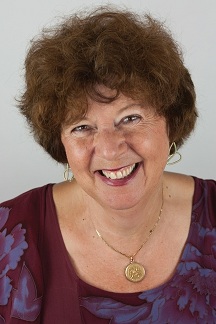
Ellen DuBois
Distinguished Research Professor
Email: edubois@ucla.edu
Office: 9341 Bunche Hall
Phone: 310-825-1846
Class Website
View All
Research
History of U.S. women with a focus on political history. History of the woman suffrage movement in the United States, and of the history of American feminism. History of international feminism. Transnational history of U.S., 29th century
Publications
- Common-Place, Winter 2009, “Seneca Falls in Santa Cruz“
- With Lynn Dumenil, Through Women’s Eyes: An American History with Documents (Beford/St. Martin’s Publishers 1/2005)
- With Richard Candida Smith, coeditors, Elizabeth Cady Stanton: Feminist as Intellectual, New York University Press, 2007
- “Margaret Fuller in Italy,” WOMEN’S WRITING, vol. 10, 2003 With Cott, Lerner, Sklar and Hewitt, “The Future of Women’s History: Considering the State of U.S. Women’s History,” JOURNAL OF WOMEN’S HISTORY, vol. 15, 2003
- “Woman Suffrage: The View from the Pacific,” in PACIFIC HISTORIC REVIEW, Nov. 2000 From Woman Suffrage, Women’s Rights (New York University Press 1998), “The Last Suffragist,” an intellectual autobiography
- “Free Love” Article on H-Women, 2001
- http://www2.h-net.msu.edu/~women/papers/freeloveintro.html
- http://www2.h-net.msu.edu/~women/papers/freelove.html
- Harriet Stanton Blatch and the Winning of Woman Suffrage, Yale University Press, 1997
- Woman Suffrage and Women’s Rights: Essays, New York University Press, 1997
- Feminism and Suffrage: The Emergence of an Independent Women’s Movement in America 1848-1869 (Cornell U.P., 1978)
- Editor, Elizabeth Cady Stanton, Susan B. Anthony: Correspondence, Writings, Speeches (Northeastern, 1992) With Kennedy, Korsmeyer, Kelly and Robinson, Feminist Scholarship: Kindling in the Groves of Academe (University of Illinois, 1985)
- “Working Women, Class Relations and Suffrage Militance: Harriot Stanton Blatch and the New York Woman Suffrage Movement, 1894-1910, Journal of American History, June, 1987
- Editor, with Vicki Ruiz, Unequal Sisters: A Multicultural Reader in Women’s History, (Routledge, 1994, Second edition)
Other Activities
- Glenda Sluga January 2015 Workshop on Internationalism
- Transnational Feminism Conference
- Transnational Feminism: A Range of Disciplinary Perspectives
- DuBois on Talk of the Nation
- DuBois on NPR’s “Fresh Air”: Harriet Stanton Blatch
- Huntington Exhibit: Votes For Women
- “Three Decades Of Women’s History: An Overview With A Touch Of Programmatic Prouncement”
- Lecture on 5th Anglo.fem Conference
- Interview for Korean Service Voice of America
Awards & Grants
- 2018 Recipient, 124th UCLA Faculty Lecture; Event video: http://www.history.ucla.edu/content/ellen-dubois-124th-ucla-faculty-research-lecture
- Fellow, Royal Dutch Institute of Advanced Studies, 2006-2007
- Recipient of 1999 Guggenheim Foundation Fellowship
Graduate Students
- Sue Englander, Martin Luther King Papers (ret.)
- Daniel Hurewitz, Associate Professor, Hunter College
- Lisa Materson, Associate Professor, UC Davis
- Rebecca Mead, Associate Professor, Northern Michigan University
- Michelle Moravec, Director Women’s Center, William Paterson University
- Alison Sneider, Independent scholar, formerly Associate Professor, Rice University
- Rumi Yasutake, Professor, Konan University, Kobe
- G. Mehara Gerardo, Associate Professor, Youngstown State University
- Carol Cini, Associate Professor, De Anza Community College