
History 99
Fall 1998 |
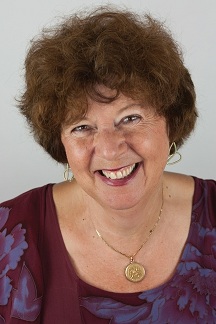
Ellen DuBois
Mon 2 - 4:30
|
VOTES FOR WOMEN: HISTORY OF A FEMINIST MOVEMENT
The subject of woman suffrage has drawn alot of
attention lately -- because of historical anniversaries, because of revived
attention to women in politics. I trust you will find its history
inherently interesting: through it we can trace the historical
activities of women, the complexities and conflicts among women, and
the impact of changing historical forces on women's activism.
However, because this course is an introduction
to historical practice, we will be looking beyond (or within) the particular
story of woman suffrage to consider the basic elements of thinking
and learning historically, that can be applied to any subject.
1) We will learn how to read the work
of historians to learn how to understand how they interpret the past.
Each time we read
a book or set of essays by an historian, our first task will be understand
what the analytic framework, the interpretation that the
author is generating, to make sense of the historical information s/he
has. All historians, even those who just seem to be "telling
a story," develop and employ an analytic framework, and we will learn
to clarify what that is.
2) At the same time, we will be learning
to distinguish between the raw material of history and the way that historians
shape and give meaning to their data. For this reason, each week
we will read both secondary (interpretive) historical writing and
primary (raw material) sources, examine how the interpretations grow
out of the data, and consider some of the different directions
that we, as budding historians, might take the same primary sources.
3) Finally, we will try and make historiographic
sense of our readings. What this means is that we will try
and understand each
of our historians -- and their relations to each other -- in historical
context. In this way, we will trace the evolution of
historical interpretation about woman suffrage, starting with Eleanor
Flexner's Century of Struggle, written in 1957, and ending
with Rosalyn Terborg-Penn's African American Women in the Struggle
for the Vote, published just this year.
Books to be purchased at Sisterhood Bookstore, Westwood and
Rochester:
-
Eleanor Flexner, Century of Struggle: The Women's Rights Movement
in the United States
-
Aileen Kraditor, Ideas of the Woman Suffrage Movement, 1890-1920
-
Ellen DuBois, Woman Suffrage and Women's Rights
-
Rosalyn Terborg-Penn, African American Women in the Struggle for the
Vote, 1850-1920
-
Mari Jo and Paul Buhle, eds., Concise History of Woman Suffrage
Course requirements:
1) 20 points. Attend all classes; do all reading; participate
actively in class.
2) 20 points each. Four short (3-5 page) papers.
#1 (due on October 26) A short paper discussing Eleanor Flexner's
analytic framework in Century of Struggle
#2 (due on November 15) A short paper analyzing anyone of the
documents read so far in class
#3 (due on December 8) A short paper comparing two different
historical interpretations of a single phenomenon, as in classes
for November 15, November
30 or December 8
#4 (date to be announced, during finals week) Repeat anyone of
the three exercises above, using a different set of readings.
October 5: Introduction
October 12: Flexner, Part I; DuBois chapter 12; documents:
-
Preceding
Causes, written by Matilda Joslyn Gage in 1881,
-
World's
Anit-Slavery Convention, London, England, June 1840,
-
Seneca
Falls Convention, Seneca Falls, New York, July 19-20, 1848, including the
Declaration of Sentiments and Resolutions,
-
Eliabeth
Cady Stanton, Address, First Annual Meeting of the Woman's State Temperance
Society, Rochester, New York, June 1, 1853
October 19: Flexner, Part II: documents:
-
Resolutions
and Debate, Woman's national Loyal League meeting, New York City, may 14,
1863
-
United
States Centennial Celebration and the Declaration of Rights, Philadelphia,
Pennsylvania, July 4, 1876
-
South
Dakota Campaign, 1890
-
Colorado
Campaign, 1893
October 26: Flexner, Part III: documents:
-
Suffrage
Strategy, NAWSA Convention, Minneapolis, Minnesota, May 30-June 4, 1901
-
Harriot
Stanton Blatch, "Woman as an Economic Factor, " NAWSA Convention, Washington,
D.C., February 13-19, 1898
-
Florence
Kelley, "Working Woman's Need of the Ballot," NAWSA Convention, Washington,
D.C., February 13-19, 1898
-
Jane
Addams, "The Modern City and the Municipal Franchise for Women," NAWSA
Convention, Baltimore, Maryland, February 7-13, 1906
-
Illinois
Campaign, 1910-13
-
New
York Campaign, 1915
-
Congressional
Committee Activities, NAWSA Convention, Washington, D.C., November 29-December
5, 1913
-
The
Congressional Union, NAWSA Convention, Washington, D.C., December 14-19,
1915
-
NAWSA
Convention, Washington, D.C., December 12-19, 1917
November 2: Kraditor, chapters 3, 6-7, 9; documents:
-
Olympia
Brown, "Foreign Rule," NWSA Convention, Washington, D.C., January 21-23,
1889
-
Henry
B. Blackwell, Address to NAWSA Convention, Atlanta Georgia, January 31-February
5, 1895
-
Elizabeth
Cady Stanton, "Educated Suffrage," NAWSA Convention, Washington, D.C. February
12-18, 1902
-
Belle
Kearney, "The South and Woman Suffrage," NAWSA Convention, New Orleans,
Louisiana, March 15-25, 1903
-
NAWSA
Position on the Race Question, Letter to the New Orleans Times-Democrat,
during March 1903 Convention
November 9: DuBois, chapters 1, 2, 3, 4, 5; documents:
-
Susan
B. Anthony, Ernestine L. Rose, and Elizabeth Jones, Addresses to the Tenth
National Woman's Rights Convention, New York City, May 10-11, 1860
-
Debates on Marriage and Divorce, Tenth National Woman's Rights Convention,
New York City, May 10-11, 1860
November 15: Interpreting the Reconstruction Amendments: DuBois
6, 7,; Terborg-Penn, 1, 2; documents:
-
Woman's
Rights Convention, New York City, May 10, 1866, including Address to Congress
adopted by the Convention
-
Resolutions
and Debate, First Annual Meeting of the American Equal Rights Association,
New York City, may 10, 1867
-
Elizabeth
Cady Stanton, Address to the National Woman Suffrage Convention, Washington,
D.C. January 19, 1869
-
Debates
at the American Equal Rights Association Meeting, New York City, May 12-14,
1869
-
Virginia
L. Minor's Petition, Circuit Court of St. Louis County, Missouri, December,
1872
-
The
United States of America vs. Susan B. Anthony, Circuit Court, Northern
District of New York, June 17-18, 1873
November 23: Terborg-Penn, chapters 3-8; documents:
-
Akron
Convention, Akron, Ohio, May 28-29, 1851. Reminiscences by Frances D. Gage
of Sojourner Truth
-
Prayer
of One Hundred Thousand, presented by Charles Sumner, U.S. Senate, February
9, 1864
-
Sojourner
Truth, Address to the First Annual Meeting of the American Equal Rights
Association, New York City, New York, May 9, 1867
November 30: Deradicalizing Suffrage: Kraditor 4, 5; DuBois
8, 9; documents:
-
Elizabeth
Cady Stanton, Address, First Annual Meeting of the Woman's State Temperance
Society, Rochester, New York, June 1, 1853
-
Debate
on Woman Suffrage and the Churches, NWSA Convention, Washington D.C., February
17-19, 1886
-
Elizabeth
Cady Stanton, "Solitude of Self," Address before the U.S. Senate Committee
on Woman Suffrage, February 20, 1892
-
The
Bible Resolution and Susan B. Anthony's comment, NAWSA Convention, Washington
D.C., January 23-28, 1896
December 8: Politicizing Votes for Women: Kraditor 8,
DuBois, 10,
Links:
Class
Bulletin Board
(The bulletin board is password protected; please see your instructore
for more information.)
ATTENTION: NEW FINAL
ASSIGNMENT, TO REPLACE THIRD PAPER
-
8 to 10 pages
-
due 12/16, 2:30 my office
-
use at least three sources, drawing from both primary and secondary
readings
1) Trace the "historiography" of woman suffrage, that are the
different phases of historical interpretation: what are the basic
assumptions, questions and answers, who is doing the asking, what isn't
being considered, etc. In order to use primary sources for this question,
consider the History of Woman Suffrage as the first historical interpretation
of the history of woman suffrage. And, in order to avoid the "enormous
condescension of the living to the dead," remember that there will be historians
that come after us, that ask questions we can't conceive, so don't imagine
that the current state of historical analysis is the end of the line.
2) We know that, by the end of the long struggle for woman suffrage,
lots of different sorts of women understood and shared a conviction in
the necessity of political rights for women. Write an essay examining
and comparing some of the differences among women within this larger pro-suffrage
consensus. You needn't cover every single type of woman, but make
sure that the ones you do choose to discuss are diverse with respect to
class, race and historical period.
3) Running as it does across seventy five years (minimally) of
American history, the woman suffrage movement has been transformed by --and
had an impact on -- major changes in American history. Outline a history
of the woman suffrage movement that emphasizes these shifting, large historical
contexts: in particular, antebellum abolition and reform; Reconstruction;
turn of the
century industrialization, immigration and class relations; and the
Progressive period.